Media
How lookalike audiences work and how to build a good one
A lookalike audience is only as good as the list you hand the platform, so most of the work happens before you ever click create.
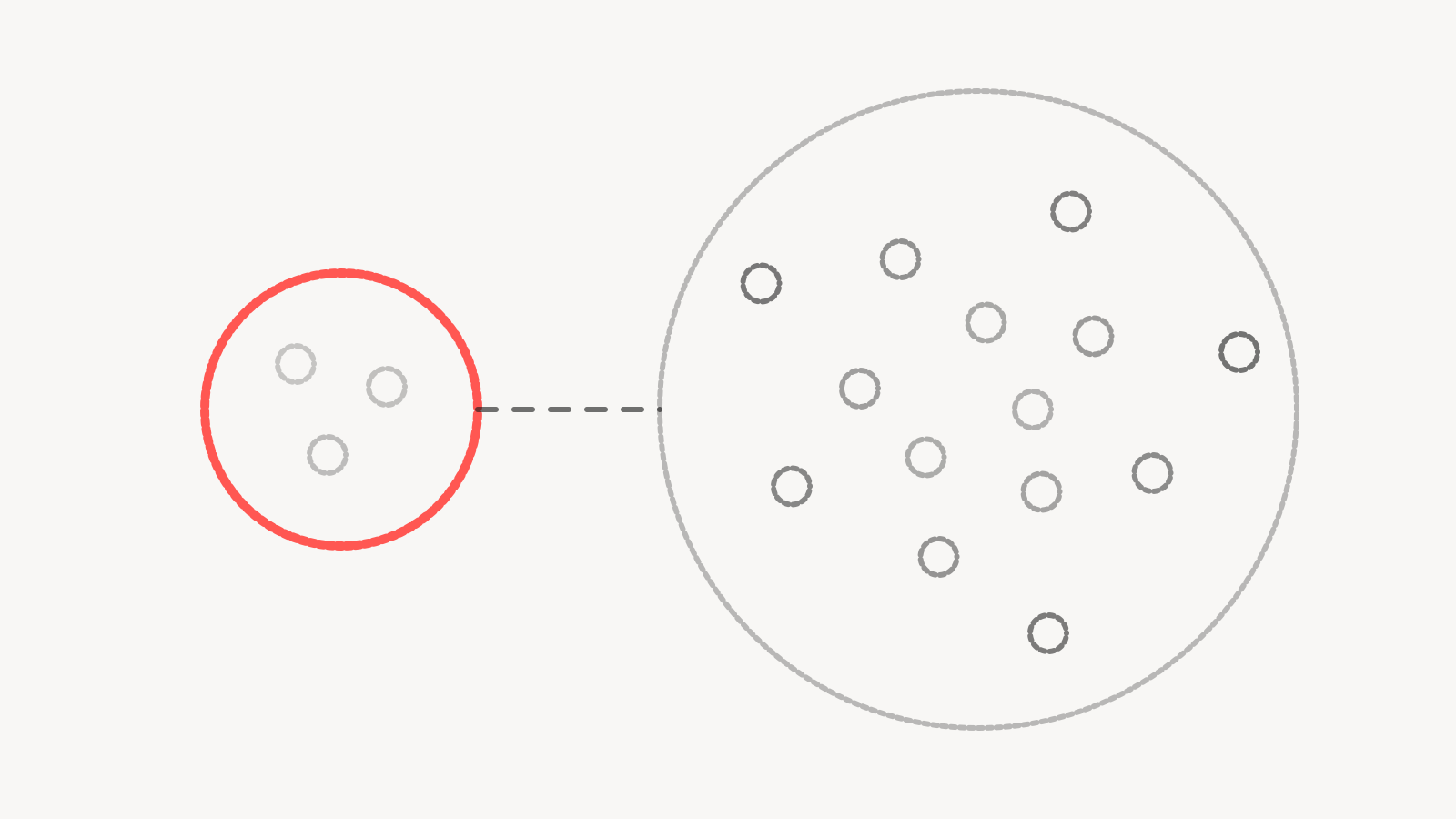
A lookalike audience is a group of people an ad platform finds because they resemble a list you give it. You upload or select a source, such as your customers, your newsletter subscribers or people who converted on your site, and the platform builds a new audience of people who share traits with that source.
Meta's Marketing API documentation says lookalike audiences take several sets of people as seeds, and Meta builds an audience of similar people. For conversion-based lookalikes, the same page says Meta trains a prediction model and then creates the audience.
That's the whole mechanism. You don't choose the traits. The platform decides what makes your seed different from everyone else and goes looking for more of it. Which means the seed is the strategy.
Seed quality decides the result
If you hand the platform a list of everyone who ever filled out a form, it will find more people who fill out forms. Some of those will be customers. Many won't. If you hand it a list of people who bought, came back and bought again, it has a much clearer picture to work from.
We think about seeds in terms of what the business actually wants more of. For an online store, that might be repeat buyers or high-value customers instead of every first-time order. For a service business, it's usually leads that became clients, pulled from the CRM, instead of every lead the ad platform recorded. For a subscription, it's people who stayed past the point where most cancel.
A few things make a seed weaker. Lists that mix very different customers, like wholesale and retail buyers in one file, blur the signal. Old lists full of people who no longer engage describe who your customers used to be. Lists built from a tracking event that fires too often, like a page view labelled as a lead, teach the model the wrong behaviour entirely.
Size matters too, within limits. Meta's Marketing API documentation on lookalikes says a source needs at least 100 people from a country to build a lookalike there. For lookalikes built from conversions, the same page says you need at least 100 unique conversions and recommends 200 or more. Those are the minimums for the feature to work. Meeting them says nothing about whether the result will be useful. A small, precise list of your real customers often beats a large list of loosely related people.
How audience size works
When you build a lookalike, you choose how closely the audience should match the seed, expressed as a percentage of the population in the target location. A smaller percentage means people who resemble the seed most closely. A larger one widens the pool and loosens the match. Meta's Marketing API documentation sets the ratio range at 1% to 20%, in steps of 1%.
There's a trade-off. A tight lookalike may be too small to deliver efficiently at your budget. A wide one may be so broad that it behaves much like general targeting. The right size depends on your budget, your location and how distinctive your customers are, and the only way to know is to test.
Consent and data handling
A customer list upload is personal data leaving your systems for an advertising purpose. Before using one as a seed, the business needs to know it has the right to use those contacts that way.
That's a question about how the data was collected and what people agreed to when they gave it. A list of newsletter subscribers who opted in to marketing is a different case from a list of support tickets. The privacy rules that apply depend on where your customers are, and the person responsible for privacy at the business should sign off before a list goes to any platform.
On the mechanics, check each platform's documentation for how it expects customer data to be hashed and formatted. Keep the original lists in your own systems, upload only the fields you need, and keep a record of which lists went where and when. If someone asks to be removed from your marketing, you need to know which seeds they're in.
Special ad category limits
Some kinds of ads can't use lookalikes at all. Meta's Marketing API documentation on special ad categories lists housing, employment, and financial products and services among the categories, and states that lookalike audiences are unavailable for housing, employment, and financial products and services ads.
The same documentation sets other limits for those categories. Age options are generally fixed to include 18 through 65+, choosing a specific gender isn't allowed, and selected locations must cover a radius of at least 15 miles or 25 kilometres around a chosen city, address or pin in the US and Canada. Behaviour and demographic targeting and detailed targeting exclusions aren't permitted.
So for a real estate developer, a rental property, an employer or a lender, lookalikes are off the table on Meta, along with several other targeting tools. This catches teams out when they copy an audience strategy from a retail account into a housing or recruitment one. Declare the category correctly at the campaign level and build the plan around what's allowed: broad targeting, strong creative, clean conversion tracking and careful location settings.
When we work on audience building for these accounts, the first step is confirming the category, because it decides which tools exist.
How to test a lookalike
A lookalike is a hypothesis about where your next customers are. Test it like one.
Run it against a comparison that matters to you, usually your current prospecting setup or broad targeting with the same creative and budget. Keep the test long enough for the platform to finish learning and for conversions to arrive, and judge it on the outcome you care about, measured in your own data where possible. A lookalike that produces cheap leads that never become customers has failed, however good the ad platform's report looks.
Test seeds against each other too. A lookalike built from repeat buyers versus one built from all buyers tells you something useful about your customers either way.
Watch for overlap. If a lookalike and a retargeting audience share many of the same people, results can look better than they are because some of those people were going to buy anyway. Exclude existing customers and recent converters from prospecting lookalikes unless you have a reason to include them.
Refresh seeds on a schedule. Customer lists go stale, and a lookalike built from last year's buyers describes last year's business. Our Meta ads management work includes keeping track of which seeds feed which audiences and when they were last updated.
Questions people ask
What is a lookalike audience on Meta?
It's an audience Meta builds by finding people who resemble a source list you provide, such as customers or past converters. Meta's documentation describes the source as a seed, and Meta decides which traits make that seed distinctive.
How big does a lookalike source audience need to be?
Meta's Marketing API documentation says at least 100 people from a country, and for conversion-based lookalikes at least 100 unique conversions with 200 or more recommended. A precise list of your most valuable customers usually matters more than reaching a larger number.
Can I use lookalike audiences for housing or job ads?
Not on Meta. Its special ad category documentation states that lookalike audiences are unavailable for housing, employment, and financial products and services ads, and it limits age, gender and location targeting for those categories as well.
Are lookalike audiences still worth using?
They can be, when the seed reflects what the business actually wants more of and the result is tested against a fair comparison. Judge them on customers or revenue in your own data, since a cheap lead that never converts doesn't count.