Data
What marketing mix modeling is and when it's worth doing
A marketing mix model can show how spend and sales move together across every channel, as long as you feed it enough history and treat its answers as estimates.
Marketing mix modeling, or MMM, is a statistical method that estimates how much each marketing channel contributes to sales, using aggregated data over time. You'll also hear it called media mix modeling. The two terms are used interchangeably, though "marketing mix" sometimes implies the model also covers price, promotions and distribution, while "media mix" focuses on paid channels.
The idea is old. Consumer goods companies have long used versions of it to decide how to split budgets between television, print, radio and retail promotion. It has come back into fashion as user-level tracking has become harder, because MMM doesn't need to follow individual people. It works on totals.
This article covers how it works, when it's worth the investment, what data it needs and where it falls short.
How a marketing mix model works
At its core, an MMM is a regression. It looks at a long history of a business outcome, usually weekly sales or leads, next to a history of everything that might have influenced it. That includes spend or impressions by channel, prices, promotions, seasonality, holidays, competitor activity where it's known, and broader factors like the economy or weather.
The model then estimates how much of the outcome each factor explains. If sales tend to rise shortly after search spend increases, and that pattern holds after accounting for season and price, the model attributes part of those sales to search.
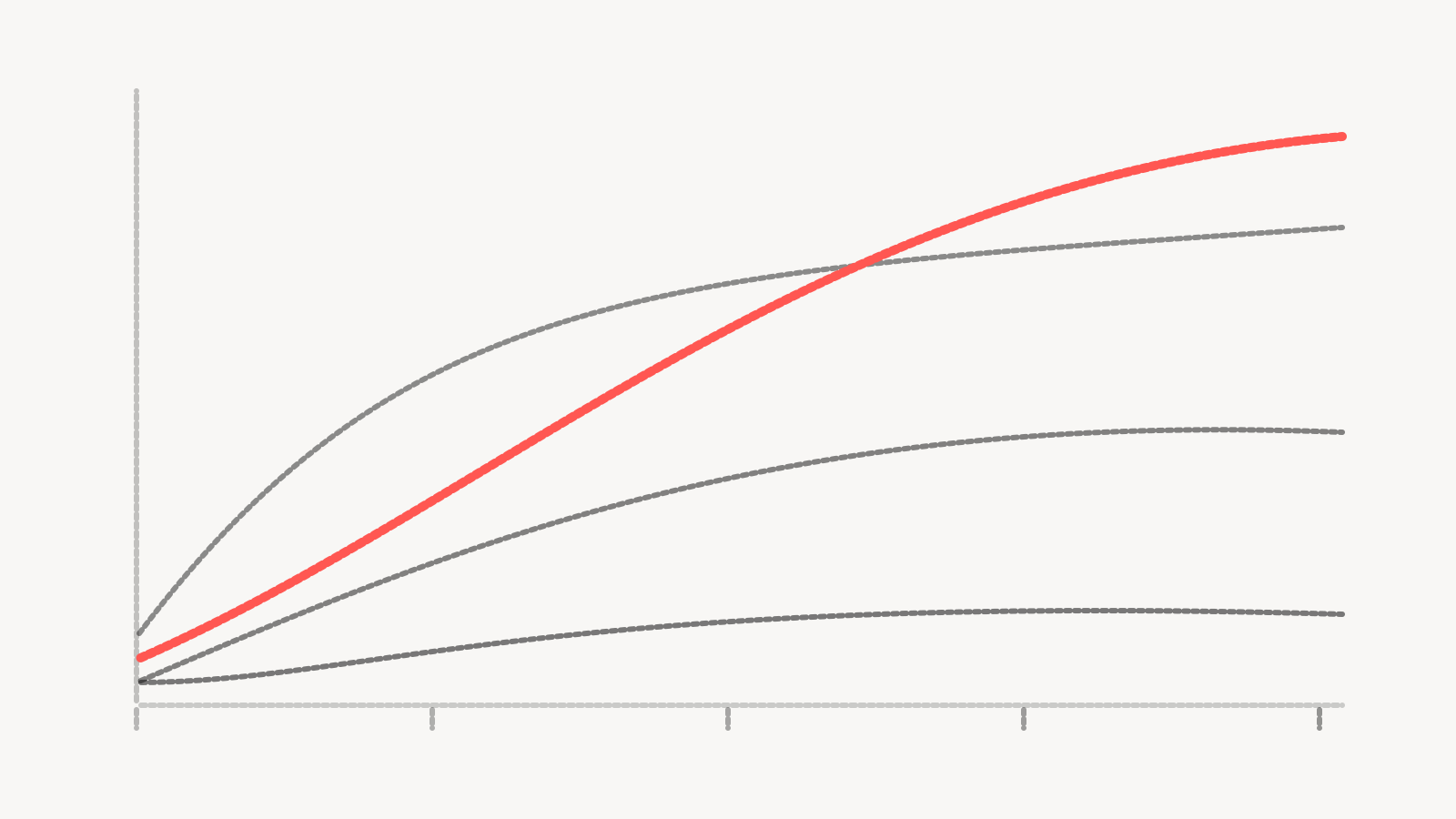
Two refinements make MMM more realistic than a simple regression. The first is carryover, sometimes called adstock. Advertising doesn't only work the day it runs. A TV flight or a large video campaign can keep influencing sales for weeks, and the model estimates how quickly that effect fades. The second is saturation. The first dollars spent in a channel usually do more than the last ones, and the model estimates where each channel starts to show diminishing returns.
Those two estimates are what make MMM useful for planning. They let you ask how sales would likely change if you moved budget from one channel to another, or increased total spend.
When MMM is worth it
MMM suits some businesses far better than others.
It works well when you spend across several channels, including ones that are hard to track at the user level, like TV, radio, out-of-home, podcasts or broad video. It works well when your spend varies over time, because the model learns from variation. And it works well when you have a long, consistent history of sales and spend at a weekly level.
It's a weak fit when most of your spend is in one or two digital channels with stable budgets, when you have little history, or when the business has changed so much that old data no longer describes it. A company that launched last year, or that just changed its pricing model, will struggle to get a reliable read.
Cost matters too. A model built properly takes analyst time to assemble data, build, validate and refresh. Open-source modeling tools reduce the software cost, but the work of collecting clean inputs and interpreting results hasn't gone away. For smaller budgets, simpler methods like well-designed lift tests may give more useful answers per dollar.
The data it needs
The quality of an MMM depends almost entirely on its inputs. Here's what a model typically needs:
- A long history of the outcome you care about, at a consistent weekly or daily level, ideally revenue or qualified leads
- Spend and, where possible, impressions or another delivery measure for every paid channel over the same period
- Pricing, promotions, product launches and distribution changes, dated
- Seasonality markers, holidays and any known external shocks, like a supply problem or a press story
The most common problems are gaps and inconsistencies. A channel that was tracked under different names in different years, a CRM that changed its lead definition halfway through, or spend data that only exists in invoices will all need cleaning before modeling can start. Expect that cleaning to take longer than the modeling.
Variation matters as much as volume. If you've spent roughly the same amount on every channel every week for years, the model has nothing to learn from. Periods where spend went up, down or off are what let it separate one channel's effect from another's.
Where MMM falls short
MMM gives estimates with uncertainty, and good models show that uncertainty openly. A result that says paid social returned a certain amount per dollar should come with a range. If the range is wide, the model is telling you it doesn't know.
Correlation can also masquerade as cause. If you always raise search spend during peak season, the model may struggle to separate the effect of search from the effect of the season. Channels that move together are hard to tell apart.
MMM works at the channel level and on weekly totals, so it's poor at answering detailed questions. It won't tell you which ad, audience or keyword worked. It's built for budget allocation between channels and for understanding overall return, and should be used for that.
And models depend on choices made by the analyst, like which variables to include and how to shape carryover. Two reasonable analysts can produce different answers from the same data. That's a reason to ask how a model was built and validated before you act on it.
How MMM relates to attribution and incrementality tests
These three methods answer related questions in different ways, and they work well together.
Attribution assigns credit for individual conversions to the touchpoints that preceded them, using tracking data. It's fast and detailed, but it only sees what it can track and it can't tell you whether a conversion would have happened anyway. We cover the trade-offs in our article on marketing attribution models.
Incrementality tests, like geo tests and conversion lift studies, measure what happens when you change spend for one group and not another. They're the closest thing marketing has to a controlled experiment, and they answer the causal question directly, but each test covers one channel or tactic for one period.
MMM sits above both. It looks at the whole mix over a long period, including channels attribution can't see.
The strongest setups use lift test results to calibrate the MMM. If a well-run geo test says a channel drove a certain lift, the model can be constrained to agree with that result, which makes its other estimates more reliable. Attribution then handles the day-to-day optimization within channels. Planning how these fit together is the core of measurement planning.
Getting started
If you think MMM might be useful, start with a data audit before hiring anyone to build a model. List every channel you've spent on, find the weekly spend history for each, and check whether your outcome data is consistent over the same period. That exercise alone will tell you whether a model is feasible and which gaps need to be closed first.
If the history isn't there yet, you can start creating it. Keep clean weekly records of spend and outcomes by channel from now on, and deliberately vary spend in some channels so a future model has something to learn from. Our marketing data and analytics service can help with that groundwork.
Questions people ask
What is marketing mix modeling?
It's a statistical method that estimates how much each marketing channel, along with factors like price and seasonality, contributes to sales over time. It uses aggregated weekly or daily data instead of tracking individual users, which makes it useful for channels that are hard to track.
Is media mix modeling the same as marketing mix modeling?
The terms are used interchangeably. When people distinguish them, media mix modeling focuses on paid media channels, while marketing mix modeling can also include price, promotions, distribution and other levers.
How much data do you need for marketing mix modeling?
There's no fixed threshold, but the model needs a long and consistent history of outcomes and spend at a weekly level, with real variation in spend across channels. Less history and flatter spend produce wider, less useful estimates.
Should I use MMM instead of attribution?
Use them for different jobs. MMM is suited to allocating budget across channels and estimating overall return. Attribution is suited to day-to-day optimization inside digital channels. Incrementality tests can check and calibrate both.